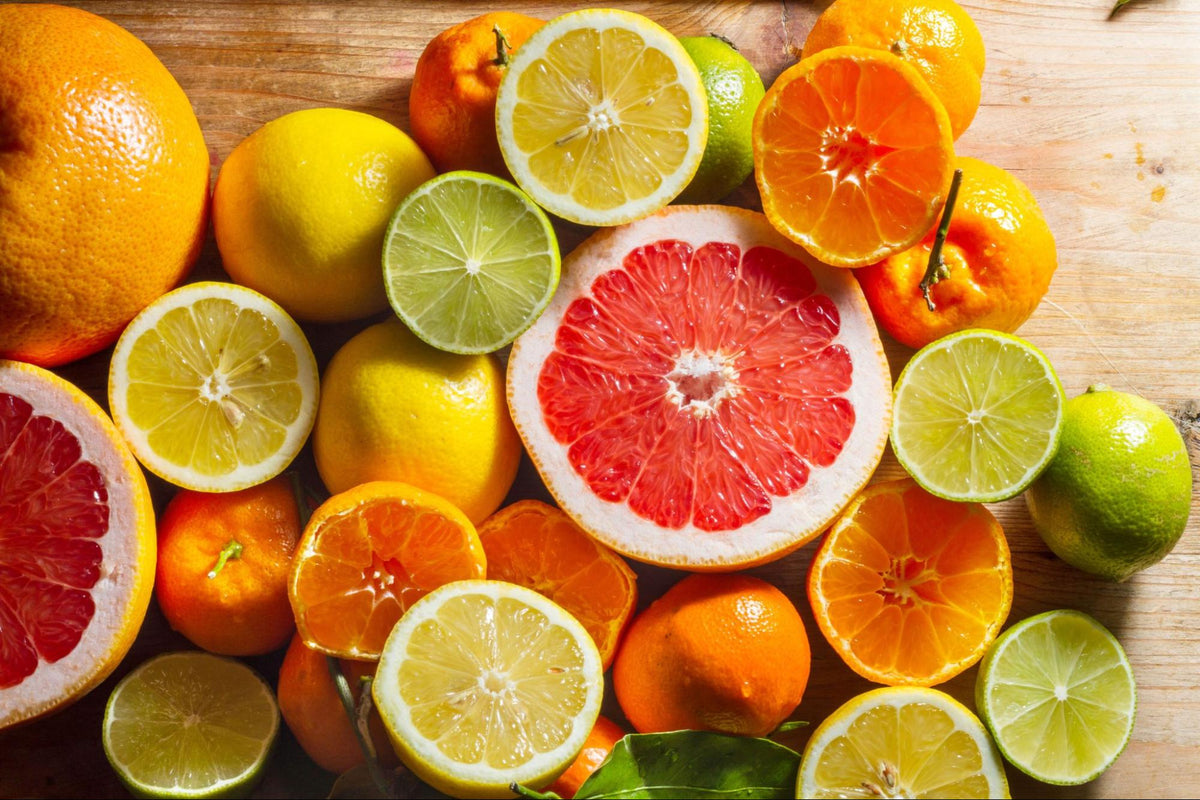









Citrus fruits are excellent for juicing. They taste wonderful on their own, but also in combination with other fruit and vegetable juices. The large family of citrus fruits includes sweet, sour, mild, aromatic, and sometimes bitter varieties – so there is something for every taste.
Citrus fruits are also incredibly versatile. Beyond their fresh flavor, they can quickly be transformed into delicious juice. For many fruits, you simply need to halve them and then juice them using a citrus press.
What are citrus fruits?
Due to natural cross-breeding and cultivation, there are numerous different citrus fruits and varieties. The best-known include oranges, mandarins, lemons, and grapefruits. Pomelos, limes, kumquats, and kaffir limes are also frequently found nowadays.
How healthy are citrus fruits?
Vitamin C contributes, among other things, to the normal function of the immune system, normal collagen formation for the normal function of skin, teeth, and bones, and normal iron absorption.
Calcium and potassium also fulfill important functions in the body. The nutrients contained vary depending on the citrus fruit and variety.
Above all, however, citrus fruits simply taste delicious. Freshly squeezed citrus juice is aromatic and refreshing – whether as part of breakfast, as a drink in the summer, or as a base for other recipes.
Shopping and kitchen tips for citrus fruits
Citrus fruits don't just taste great on their own or as juice. They are versatile in the kitchen.
You can use the fruit juice for cooking, baking, and marinating. Whether in sweet or savory dishes, citrus juice goes well with numerous recipes.
You can prepare dressings and marinades with citrus juice, refine soups and sauces, and add flavor to cakes and pastries. Lime juice is also perfect for giving various dishes a fresh, slightly tart note.
What would baked fish or a Wiener Schnitzel be without a squeeze of lemon juice? You can also refine the flavor of jams and jellies with various citrus juices.
But that's not all. The peel of citrus fruits can also be used in many ways. It is particularly aromatic. A little zest from a lime, lemon, or orange, for example, goes well with rice, salads, cakes, tarts, and cookies.
Citrus fruits are therefore true all-rounders. You can always create new juices, refine lemonades and teas, or use them to flavor various dishes.
Proper storage of citrus fruits
Citrus fruits that have already been peeled or cut should be stored in the refrigerator and consumed as soon as possible.
It is also important that the fruits have enough space and are not packed too tightly. Good air circulation can help reduce moisture and thus the risk of mold.
If you discover mold on a citrus fruit, you should dispose of the affected fruit and check the remaining ones.
Also, handle the fruits carefully so that they do not get bruised. Check them regularly and use softer or already cut fruits first.
Preparing citrus fruits

It is best to wash citrus fruits thoroughly under running water before use – especially if you intend to use the peel. For fruits where you want to use the peel, organic quality can be a good choice.
After washing, you can prepare the fruits according to your needs. For a citrus press, they are usually halved and then squeezed.
Wash your hands after preparation if necessary, and ensure a clean work surface and clean kitchen utensils.
Just a few simple steps are enough to prepare fresh juice from oranges, lemons, limes, or other citrus fruits.
Conclusion
Citrus fruits impress with their great variety, fresh taste, and versatile uses in the kitchen. Oranges, lemons, mandarins, limes, and others provide, among other things, Vitamin C and can be enjoyed both on their own and as juice.
Whether for breakfast, cooking, baking, or for freshly squeezed juices: citrus fruits can be easily integrated into everyday life.
A freshly squeezed orange juice can be an aromatic addition to a varied breakfast.