






Hardly any other topic polarizes as strongly as the question of healthy fats. Many people have different opinions on fats. There is a wide variety of diets and forms of nutrition that strictly limit fats and oils, while other forms of nutrition consciously rely on certain fat sources. As with many nutritional topics, the truth usually lies somewhere in between.
In this article, we look at fats and oils: Which fats are healthy, which should you enjoy in moderation, and which fats should you reduce as much as possible? Currently, various vegetable oils are particularly valued for their composition. These include olive oil, linseed oil, hemp oil, and peanut oil, among others.
Other fats, on the other hand, are often viewed critically – especially highly processed fat sources and trans fats.
And how was that again with trans fatty acids? What effects can they have on the body and what are trans fats anyway? In this blog post, we take you on a journey through the world of fats and oils. Because fat is an important part of our diet and fulfills various functions in the body, for example in the absorption of fat-soluble vitamins.
Here you will learn which fats are healthy and what you can pay attention to when choosing fats and oils.
What does our body need fat for and why is fat important?
Perhaps you also always try to consume as little fat as possible. Not entirely without reason, because fat has long had a bad reputation in nutrition. But basically, fat is an important part of a balanced diet.
Many vitamins such as A, D, E, and K can be absorbed better in combination with fat. Fats also play an important role for cell membranes and various metabolic processes.
However, it is important which fats you choose and in what quantities you consume them. Because at about 9 kcal per gram, fats provide a comparatively large amount of energy.
What are trans fatty acids?
Trans fats are a form of unsaturated fatty acids. Industrially produced trans fats are considered unfavorable for nutrition and should be reduced as much as possible.
They can occur, for example, in certain convenience products, snacks, fried foods, and baked goods. However, the proportion depends heavily on the respective product and manufacturing process.
Above all, a high consumption of industrially produced trans fats is associated with an increased risk of cardiovascular disease. Therefore, it makes sense not to make highly processed foods a daily part of your diet and to pay attention to the ingredient list when choosing products.
If you cook fresh yourself and use as few processed foods as possible, you can make your overall diet more conscious.
Animal fats – pros and cons
Butter, for example, contains a comparatively high proportion of saturated fatty acids. Fatty fish such as salmon, on the other hand, contains a high proportion of unsaturated fatty acids and provides omega-3 fatty acids, among other things.
If you eat animal products, fatty fish can therefore be an interesting addition to a balanced diet. At the same time, it is worth paying attention to variety overall and not relying exclusively on a single fat source.
Vegetable fats – pros and cons
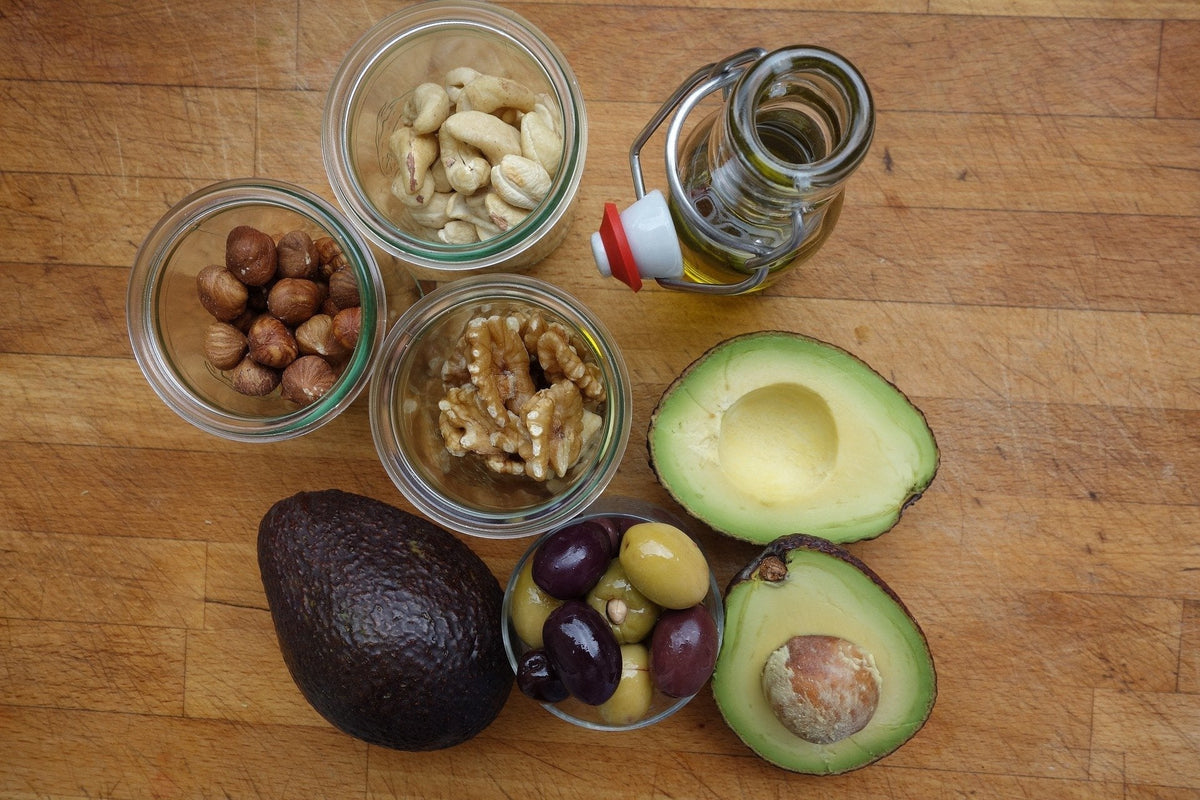
Vegetable oils as well as nuts, kernels, and seeds are not only versatile in terms of taste. In addition to fats, they also provide various vitamins, minerals, and other valuable ingredients.
Olive oil, for example, contains a high proportion of monounsaturated fatty acids. Polyunsaturated fatty acids, including essential fatty acids, can be found in linseed oil, rapeseed oil, and walnuts, among others.
However, the same applies to vegetable fats: the amount matters. One gram of fat provides about 9 kcal. Vegetable oil is therefore not calorie-free, even if it can be a useful source of fat.
Why is margarine not automatically unhealthy?

Margarine is made from vegetable oils and fats and can have a very different composition depending on the product. The statement that margarine is fundamentally "pure trans fatty acids" is no longer up to date.
If you want to use margarine, it is therefore worth taking a look at the list of ingredients and the composition. Many modern margarines are made without industrially produced trans fatty acids.
The decisive factor is therefore not only whether a product is called margarine or butter, but which fats and ingredients are actually contained.
Foods with particularly favorable fat sources
You can use high-quality vegetable oils for salads and other dishes. These include, for example, olive oil, rapeseed oil, linseed oil, or hemp oil.
Nuts, kernels, and seeds also contain valuable fats and can be easily integrated into your meal plan.
Keep oils in a dark place, tightly closed, and according to the manufacturer's instructions. Particularly sensitive oils can lose quality more quickly if stored incorrectly. Smaller bottles can therefore make sense if you only use an oil rarely.
These 7 foods are great vegetable fat suppliers
-
Walnuts and other nuts
-
Avocados
-
Flaxseeds
-
Cocoa
-
Chia seeds
-
Sunflower seeds
-
Olives
These foods provide various monounsaturated and polyunsaturated fatty acids. At the same time, depending on the food, they contain other nutrients such as vitamins, minerals, and secondary plant compounds.
They can be a useful addition to a varied diet. Nuts, seeds, and kernels can be used in salads, bowls, and smoothies, for example, or simply enjoyed as a snack.
CONCLUSION
Not all fat is the same. Just because you want to eat consciously, you don't have to completely give up fats and oils. The decisive factor is rather the selection and the right amount.
Vegetable oils can be used in many ways and are great carriers of flavor. Try different varieties and make sure to store them properly so that the oil stays fresh as long as possible.
Since fat is an important part of our diet, you can supplement your meal plan with nuts, seeds, and kernels, for example. They go well with salads, bowls, and smoothies, can be incorporated into bread, or simply eaten as a snack.
Avocados also provide fat and can be used in many ways – for example in salad, as a spread, on toast, or in a bowl.
For animal foods, it is also worth taking a differentiated look. Fatty fish, for example, can be a good source of omega-3 fatty acids. At the same time, it makes sense to reduce highly processed foods and products with industrially produced trans fats as much as possible.
Ultimately, the following applies: A balanced diet does not consist of a single "healthy" or "unhealthy" fat. The decisive factor is the entire diet and the variety of foods used.