






Bread Maker FAQ – Hole in Bread, Cleaning, Programs & Tips
Why does the hole appear in the bread? Here are the most common bread maker questions: hole in bread, gluten-free baking, cleaning & shelf life – simply explained.
Introduction: The famous ‘hole in the bread’
Almost everyone who uses a bread maker for the first time encounters the same phenomenon: the small hole at the bottom of the bread.
This “bread maker hole” is probably the most well-known feature of these devices – and at the same time one of the most common reasons why interested parties still hesitate to buy a bread maker. But: The hole is neither dangerous nor a real problem. In this article, we answer the most important questions about bread makers – from explaining the hole to gluten-free baking and cleaning.
Here you will also learn what to look out for when buying a modern bread maker with a digital display or a compact small bread maker.
Why does the hole appear in the bread?
The hole in the bread is caused by the kneading paddle, which remains in the dough during kneading. Once the bread is baked, the paddle is still stuck in the crumb – so a small hole remains when it is removed.
Is this a disadvantage?
- Visually: Yes, it doesn't look quite perfect.
- Taste: No, the bread still tastes delicious.
- Practical: The hole hardly causes any problems when slicing the bread.
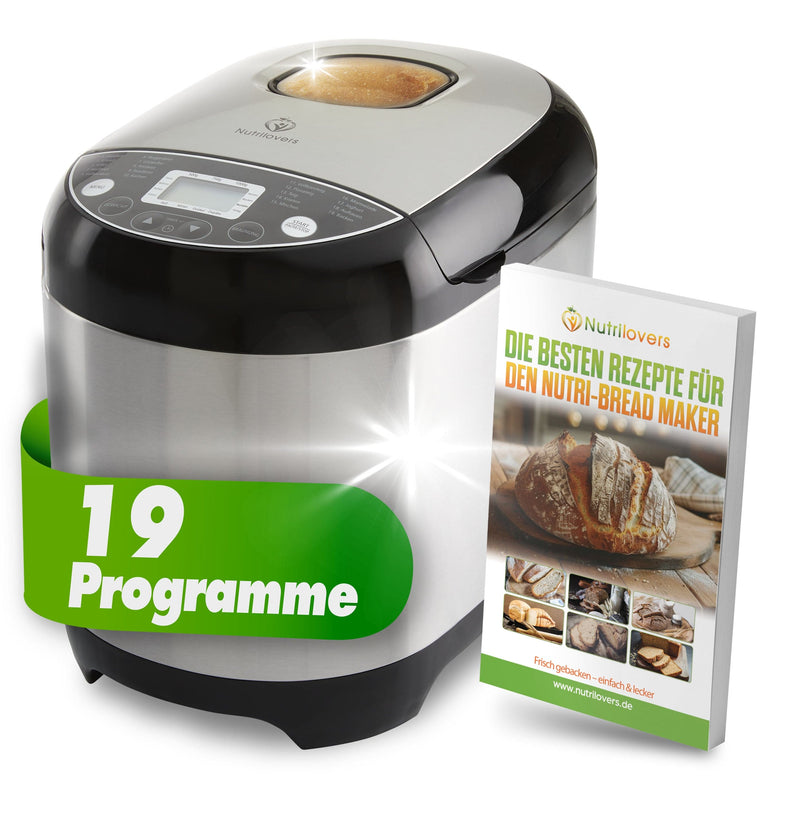
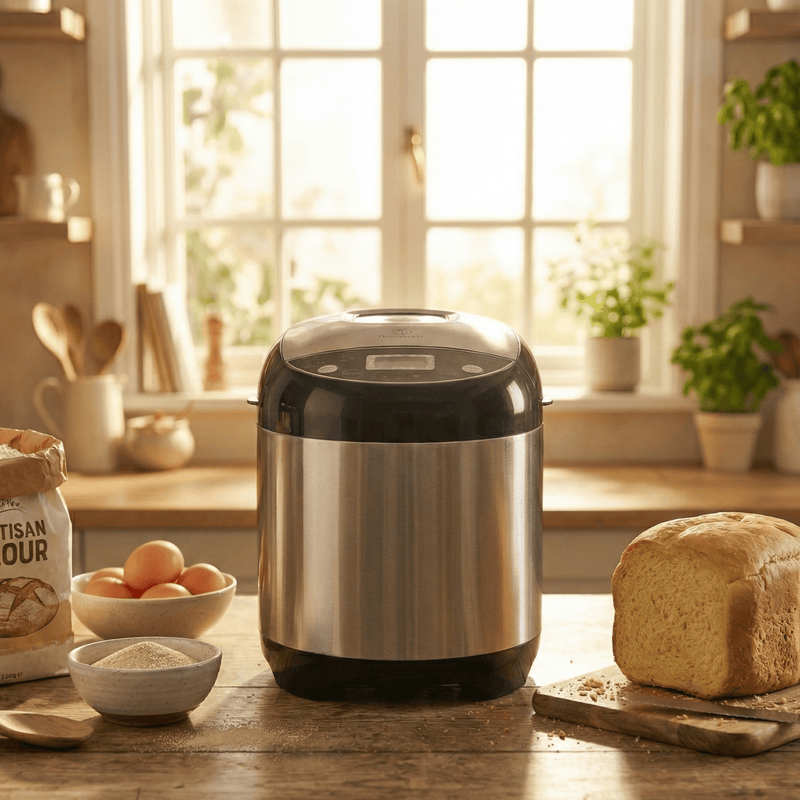
Tip: Some models offer foldable kneading paddles that minimize the hole. With the Nutrilovers NUTRI-BREAD MAKER, the hole remains, but its compact size means it is barely noticeable.
This makes it ideal if you are looking for a small bread maker that takes up little space but offers full performance.
Can the hole in the bread be avoided or reduced?
Yes, with a few tricks:
- Remove the kneading paddle: Remove the paddle before starting the baking process. (Caution: smooth the dough briefly afterwards.)
- Transfer the dough: After kneading, transfer the dough to a normal baking tin and finish baking in the oven.
- Model selection: Use devices with a foldable kneading paddle.
Conclusion: Anyone who can live with a small bread maker hole saves themselves extra work – and enjoys the convenience of a fully automatic baking process.
Can you also bake cakes in a bread maker?
Yes! Many modern devices offer special programs for cakes or sweet breads. Simply add the ingredients as for a batter, start the program – and after approx. 1–2 hours the cake is ready.
The Nutrilovers bread maker with digital display shows you the remaining time, temperature and program status – perfect for precise baking.
How long does homemade bread last?
Homemade bread contains no preservatives – this is healthy, but also means it lasts a little less long than shop-bought bread.
- White bread: approx. 2–3 days
- Wholemeal bread: approx. 3–4 days
- Longer shelf life: Store bread in cloth bags, bread bins or frozen
Advantage: You can bake fresh bread at any time, even overnight thanks to the timer function. The Nutrilovers also keeps your bread warm for up to 60 minutes, so you remain flexible.
Especially practical if you want your small bread maker to start automatically in the morning.
Is gluten-free baking possible in a bread maker?
Yes – but only with devices that have a special gluten-free program. Gluten-free dough behaves differently from classic yeast dough and requires adapted kneading and baking times.
The Nutrilovers NUTRI-BREAD MAKER has its own gluten-free program, so that people with coeliac disease or gluten intolerance don't have to miss out.
By the way, this also works excellently for sourdough – the Nutrilovers is therefore a real bread maker for sourdough fans.
How to clean a bread maker properly?
Thanks to its removable non-stick baking pan, the Nutrilovers is particularly easy to clean. In addition, the materials are BPA-free and food-safe – safe for the whole family.
What ingredients are best suited?
Basic ingredients for bread are:
- Flour (wheat, spelt, rye, wholemeal)
- Water
- Yeast or sourdough
- Salt
You can also get creative with:
- Grains (sunflower, pumpkin, linseed)
- Nuts or dried fruits
- Herbs or spices
Tip: With the included recipe book for the Nutrilovers bread maker, you will find many inspirations for varied breads.
Whether classic white bread or hearty sourdough bread – your bread maker with digital display ensures that every recipe succeeds.
Further frequently asked questions at a glance
Can you also prepare only dough?
Yes – many people only use the bread maker for kneading & letting dough rise. Perfect for pizza, rolls or braided yeast bread.
How loud is a bread maker?
You will hear a quiet hum during kneading. The Nutrilovers operates significantly quieter than many cheaper devices.
Do you really need a viewing window?
Not essential, but practical. The Nutrilovers offers one – so you always have an eye on the baking process.
How much electricity does a bread maker consume?
Most devices are between 600–700 watts. The Nutrilovers runs at 650 watts, which is in the efficient range.
Conclusion: Small disadvantages, great enjoyment
Yes, a bread maker leaves a small hole in the bread. But this minimal disadvantage fades when you consider the advantages: fresh bread at the touch of a button, healthy ingredients, time savings and creative variety.
The Nutrilovers NUTRI-BREAD MAKER is an ideal example:
- 19 programs including jam & yogurt
- 3 bread sizes & 3 browning levels
- Timer & keep-warm function
- BPA-free, stainless steel design, non-stick baking pan
- Price: only €169
Discover the Nutrilovers bread maker now